Dry Ice Blasting
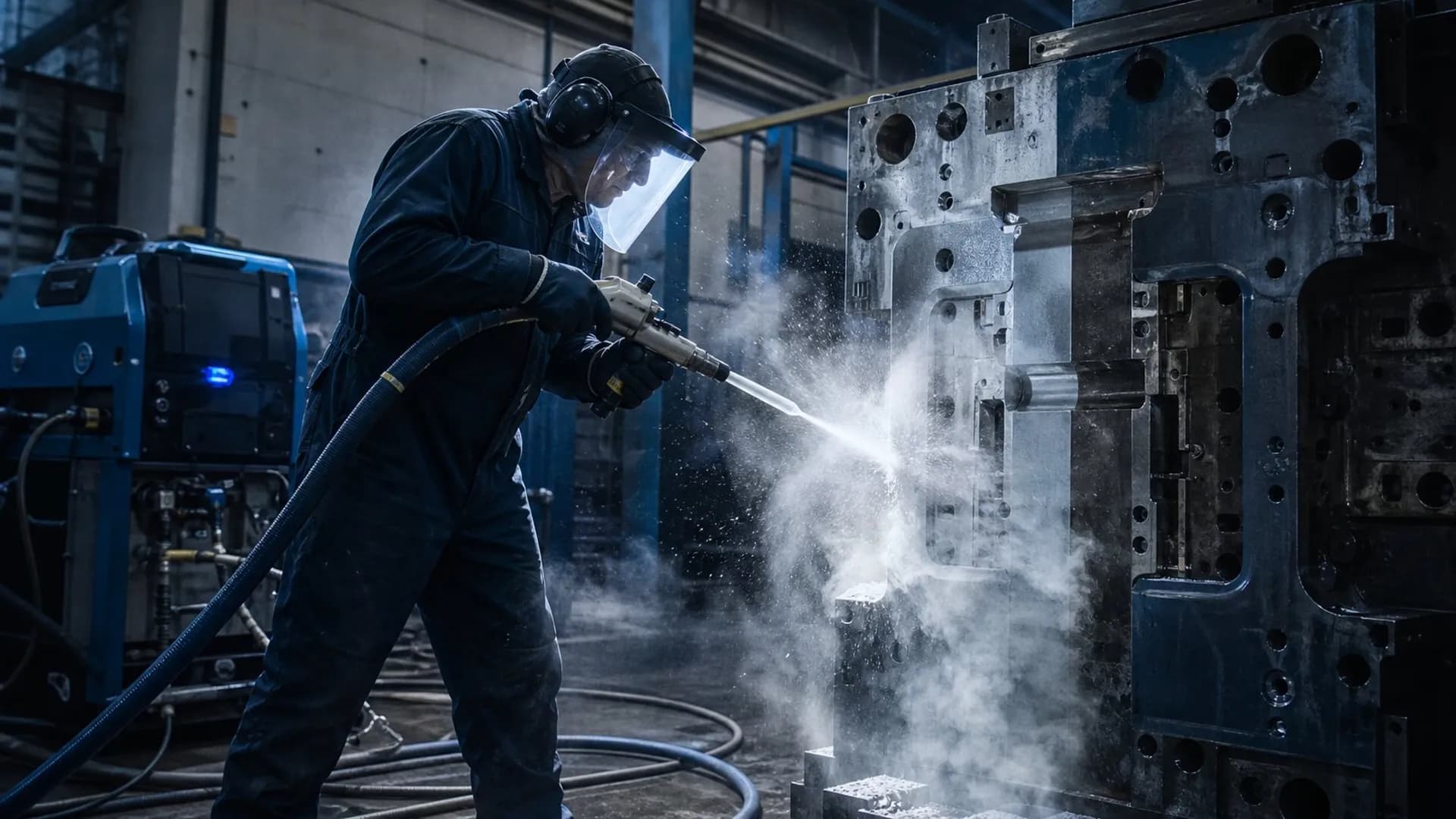
Clean the line without stopping it.
How it works
Three mechanisms, one pass.
Kinetic impact
3 mm pellets leave the nozzle at 2–10 bar and strike the surface, breaking the bond of the contamination layer.
Thermal shock
−78.5 °C ice hits a warm surface: the residue contracts, micro-cracks open and the layer separates from the substrate.
Sublimation lift
The pellet expands ~700× into gas in the crack and lifts the residue outwards. Nothing but the removed dirt is left behind.
From the field
Two zones of the same tank.
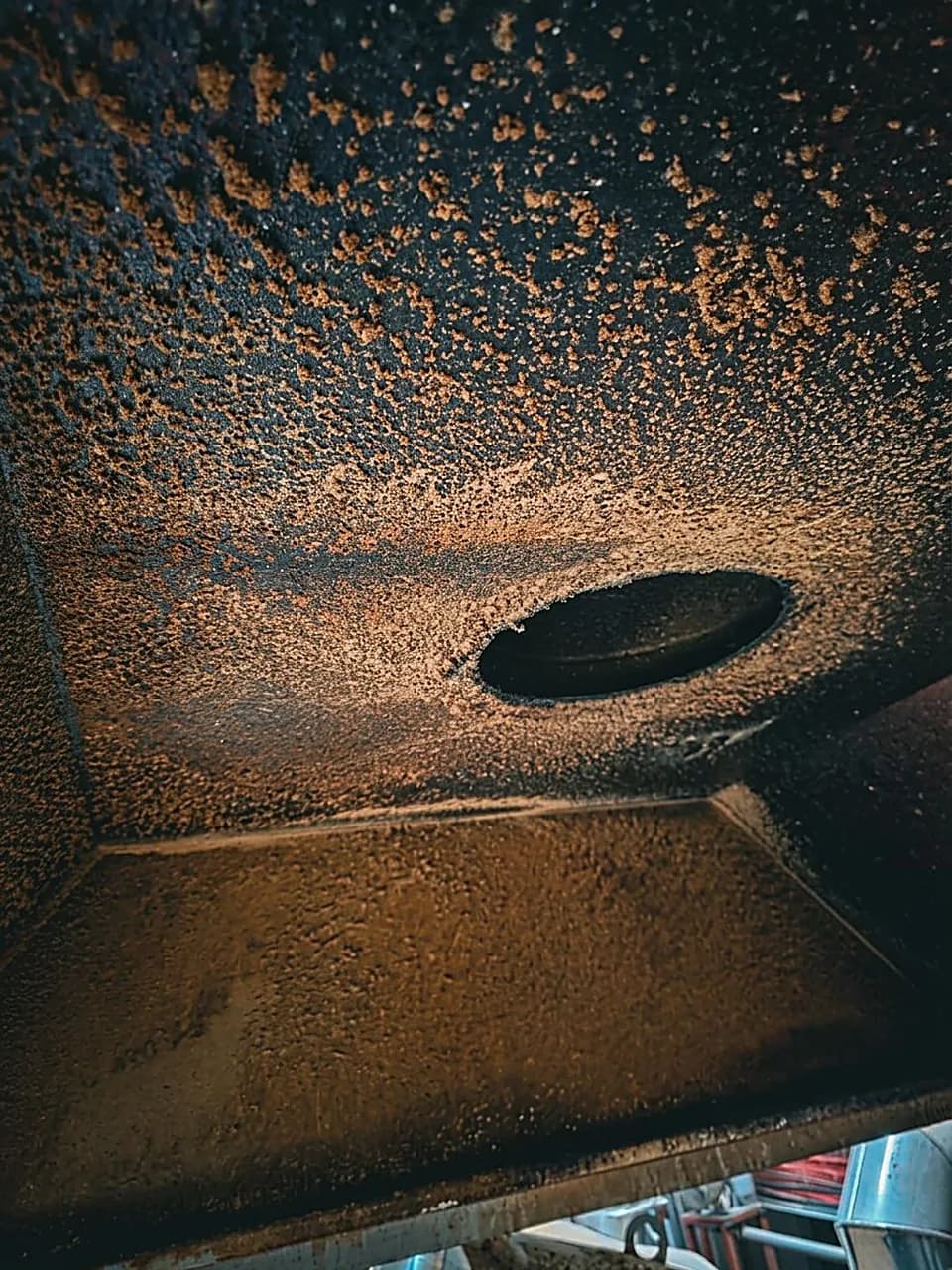 BEFORE
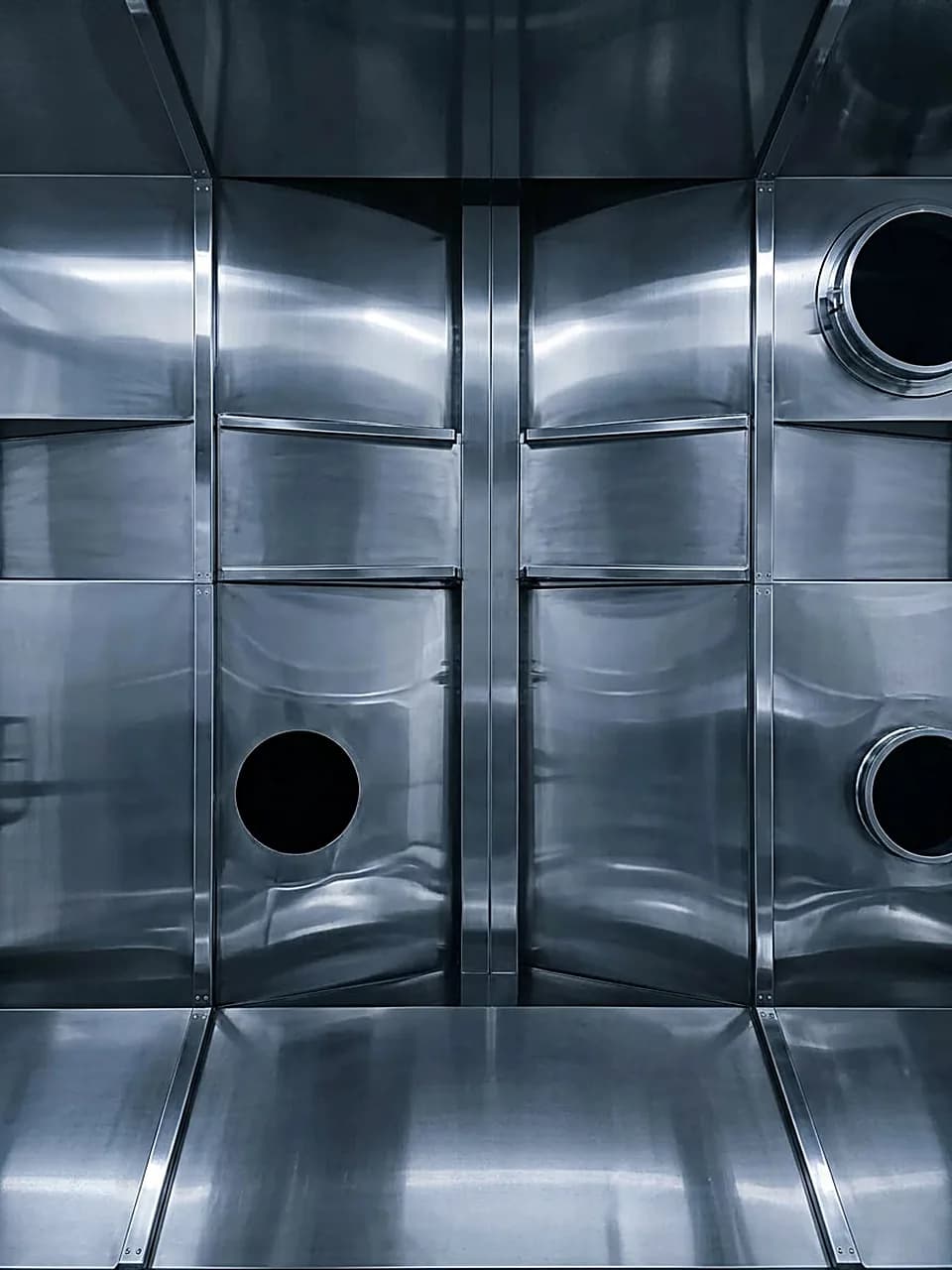 AFTER
Applications
Where we work
Injection and die-casting moulds
Cleaned hot, in the press, without dismantling — cycle restarts in minutes instead of hours.
Electrical cabinets and motors
A dry, non-conductive process. Dust, carbon and oil film removed without de-energising critical equipment.
Food production lines
No water, no chemicals, no residue. Suitable for allergen and biofilm control between shifts.
Tanks, reactors and heat exchangers
Process residue and carbon deposits stripped under confined-space procedure with CO₂ monitoring.
Turbines, aviation and MRO
Sensitive surfaces cleaned without abrasion; no grit left in channels or cavities.
Restoration and fire damage
Soot, smoke residue and old coatings removed from stone, timber and brick without soaking the structure.
Why it wins
Against water and grit
- No water, no drying time, no wastewater
- No chemicals and no secondary waste to dispose of
- Non-abrasive — surface geometry and tolerances preserved
- Equipment cleaned in place, often while still warm
- Production downtime cut from days to hours
- Before/after photo report and work documentation
Every job starts with a risk assessment and, where needed, a test patch on a sample area. Confined spaces are worked with CO₂ monitoring and forced ventilation under ISO 45001.
Shall we look at your line?
Send a photo or a video of the surface — we will tell you whether dry ice blasting is the right method before anyone travels.