Liquid Nitrogen
−196 °C, delivered to your process.
- −196 °C
- Boiling point of nitrogen
- 30–240 L
- Dewar sizes supplied
- Bulk
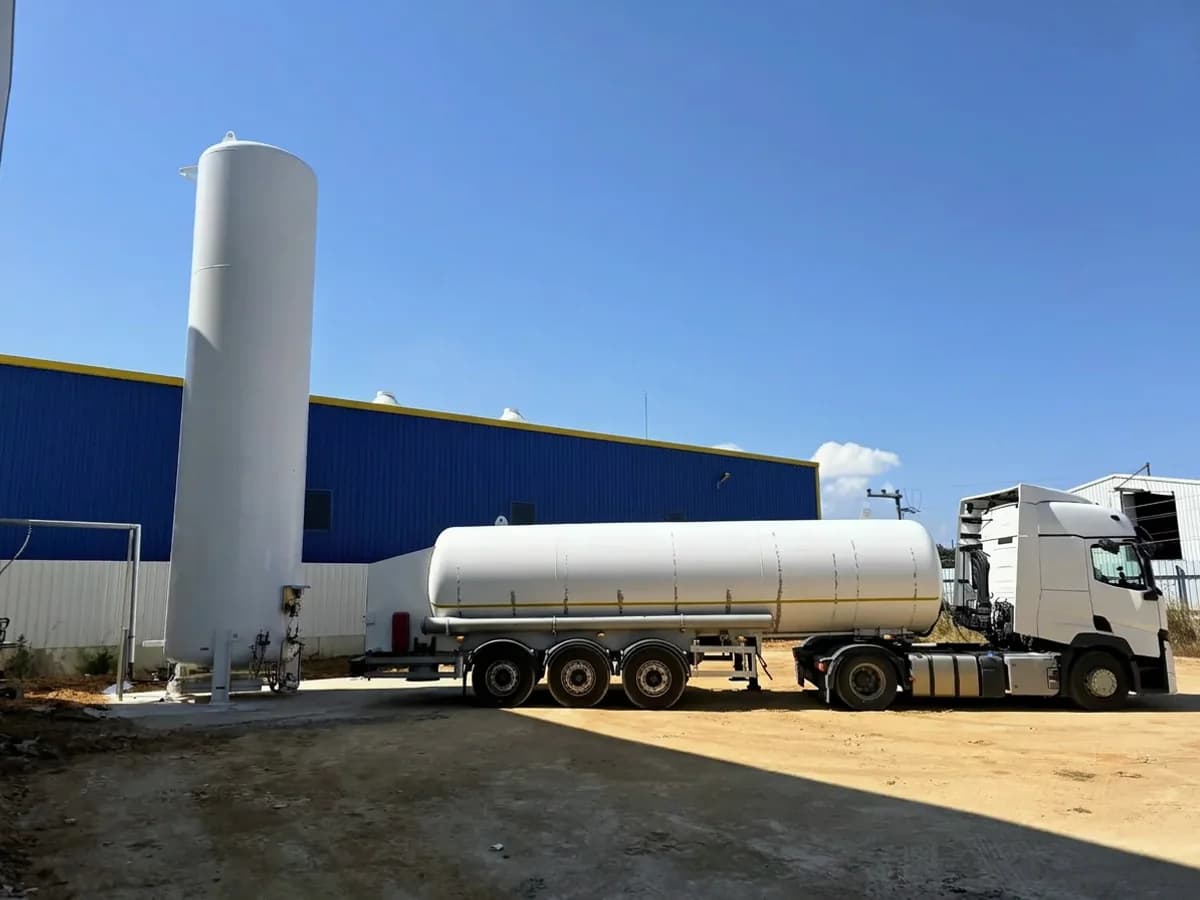
- Tanker refills to site tanks
- 1:696
- Liquid to gas expansion ratio
Applications
Where −196 °C beats dry ice
Shrink fitting
Cooling the shaft or bushing to −196 °C contracts it enough for a press-free interference fit — no heat distortion on the mating part.
Flash freezing (IQF)
Immersion or tunnel freezing forms smaller ice crystals, so cell structure, texture and drip loss stay under control.
Cryogenic grinding
Elastic materials — rubber, spices, thermoplastics — become brittle at cryogenic temperature and grind to a finer, cleaner particle size.
Deflashing and deburring
Flash on moulded rubber and plastic parts embrittles and breaks away in a tumbler without touching the part geometry.
Biological storage
Cell lines, semen, tissue and reference samples kept in vapour or liquid phase inside dewars with controlled boil-off.
Inerting and purging
Displacing oxygen in tanks, lines and packaging to prevent oxidation, explosive atmospheres and product spoilage.
Supply
Tanker, dewar or trial batch.
- Scheduled bulk refills into your on-site cryogenic tank
- 30–240 L dewar sales and rental, with transport
- Pressure-building and withdrawal accessories
- First-run engineering support on site
- Consumption measurement and boil-off optimisation
Safety rules, non-negotiable
- · Cryogenic gloves and a face shield are mandatory — contact causes severe cold burns.
- · Only use ventilated areas: one litre of LN2 becomes about 700 litres of gas and displaces oxygen.
- · Never seal LN2 in an airtight container; pressure build-up is explosive.
- · Use only vessels rated for cryogenic service; ordinary steel and glass can fracture.
- · Install oxygen depletion monitors in rooms where dewars are stored or decanted.
Not sure between dry ice and LN2?
Describe the process, the target temperature and the cycle time — we will tell you which medium is cheaper and safer for your case.