
In air freight dry ice is handled as a Class 9 dangerous good under the name UN 1845 — Carbon dioxide, solid (dry ice). Do not think of it as "just something cold": subliming CO₂ can build pressure and displace oxygen inside a closed aircraft compartment. That is why IATA DGR Packing Instruction PI 954 sets clear rules — and why a terminal officer will turn the package away over a single missing mark.
What must appear on the package
- 1UN 1845 + proper shipping nameThe number "UN 1845" together with "Carbon dioxide, solid" or "Dry ice" must be legible on the package.
- 2Class 9 pictogramThe miscellaneous dangerous goods label (the diamond with seven vertical stripes) must be printed with enough contrast against the background.
- 3Net dry ice weightThe net weight of ice per package, in kilograms. This figure is what the airline checks against its per-package limit.
- 4Venting statementThe packaging must be stated as able to vent CO₂ gas; gas-tight packaging is never accepted.
- 5Shipper & consignee detailsFull names and addresses, together with the Shipper's Declaration (DGD) where one is required.
The HMA packing protocol
We do not treat the marking as a pre-printed sticker but as a document calculated for each shipment: the ice load is printed from the figure the simulation produced, the datalogger start record is attached to the package, and acceptance is evidenced with a terminal photograph. We run the acceptance process for our packages ourselves at air cargo terminals, including Emirates SkyCargo.
On the road: ADR
- When dry ice is used purely as a refrigerant, ADR relaxes the labelling requirement for most shipments — but vehicle ventilation and driver instructions are still mandatory.
- At border crossings, a package marked as UN 1845 speeds up customs inspection.
- The same marking logic applies to sea freight (IMDG); confirm any additional rules with the port operator.
Products mentioned in this guide
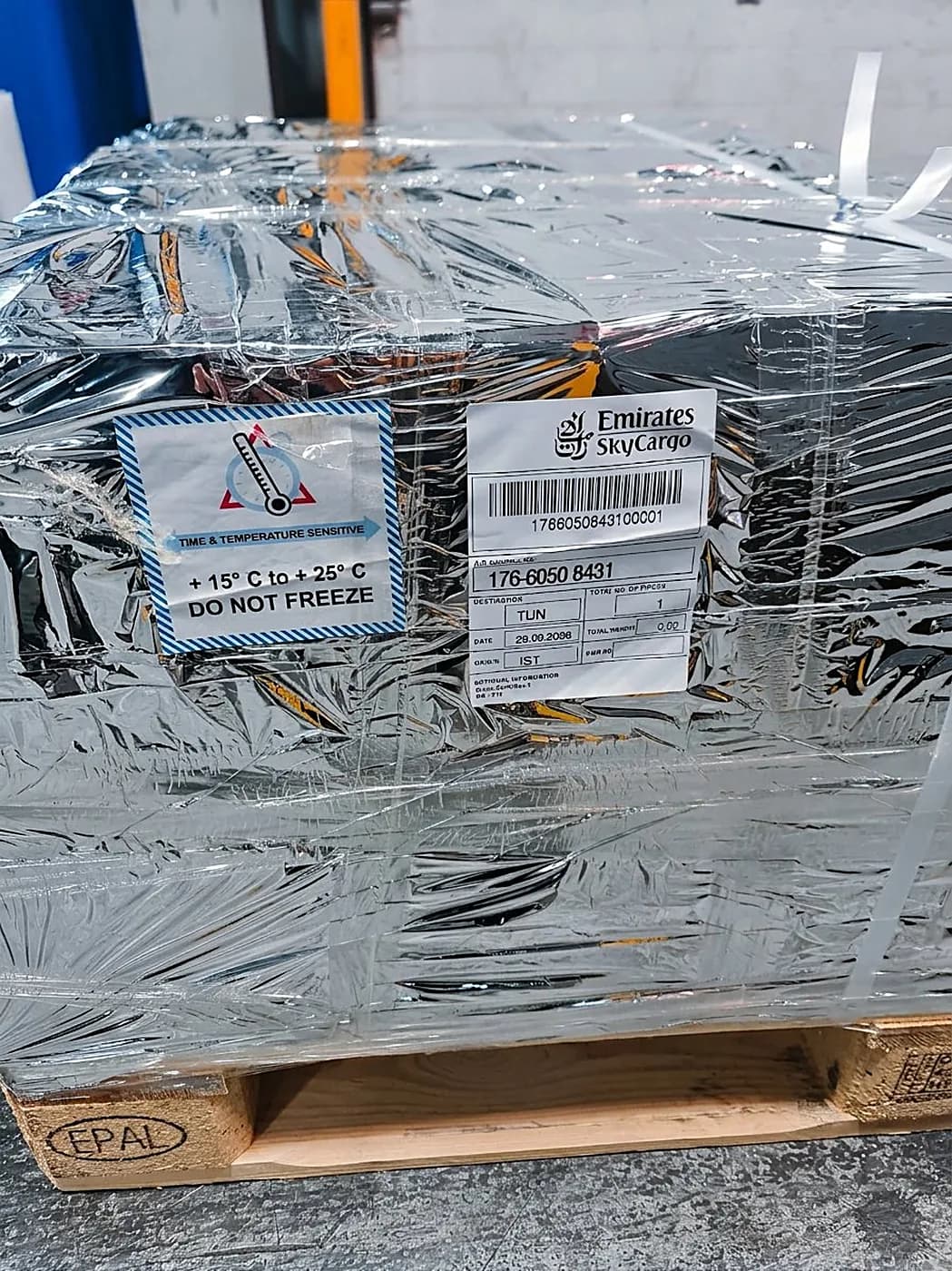
Thermal Blanket + Dry Ice Hybrid
A multi-layer reflective blanket isolates the pallet from ambient heat and cuts the sublimation rate of dry ice by up to 65%.
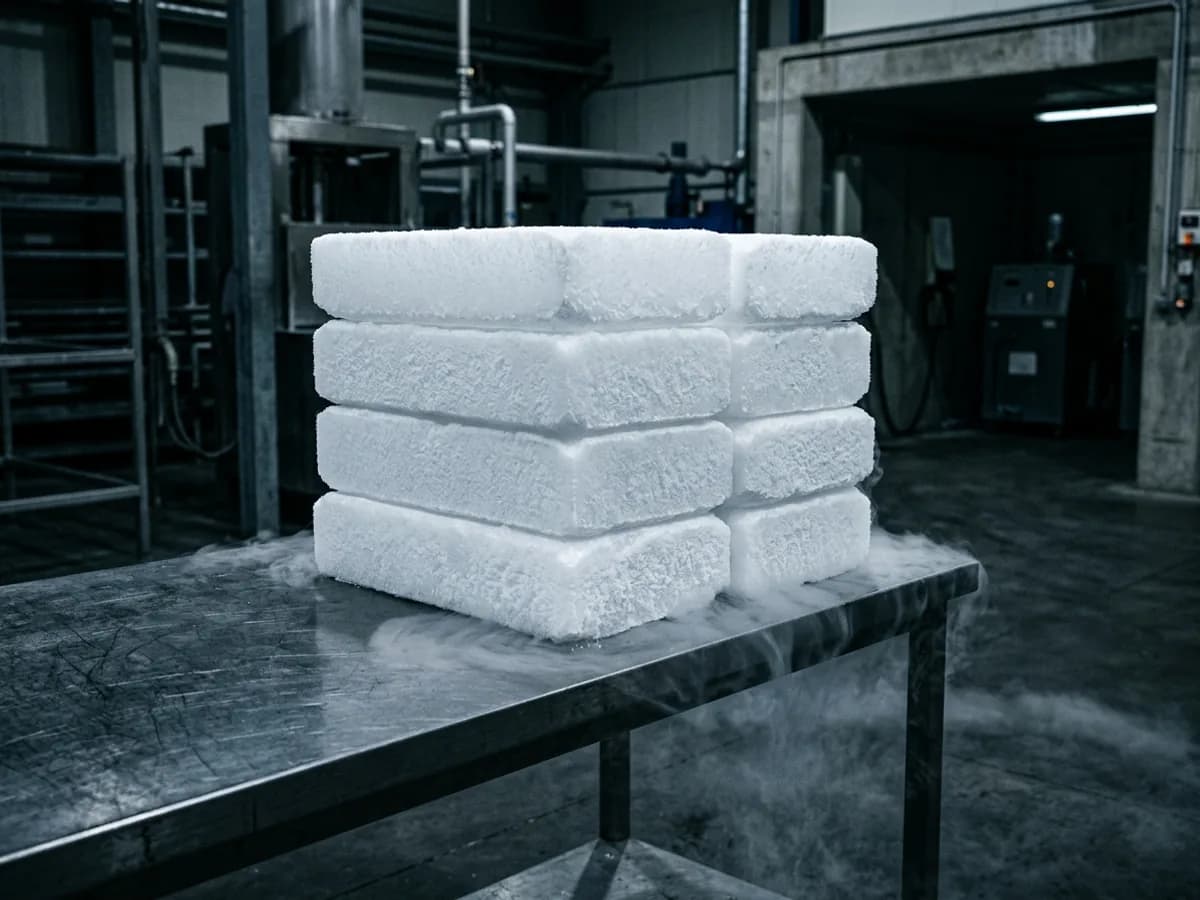
Block
Minimum surface, maximum endurance: pressed blocks and cut slices that slow sublimation down on 72–120 hour lanes.
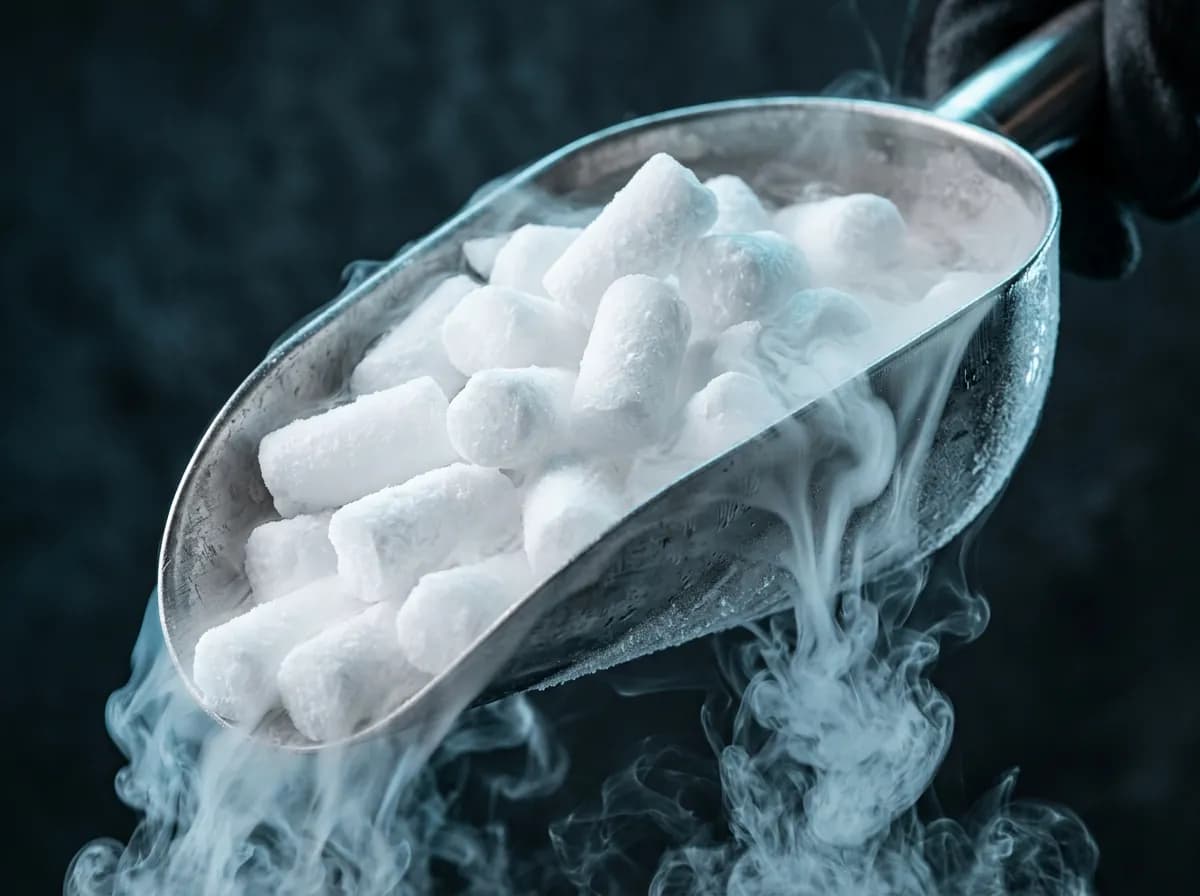
Nugget
Balanced sublimation for food shipments, flash freezing and sample transport: it neither burns off too quickly nor leaves voids in the package.