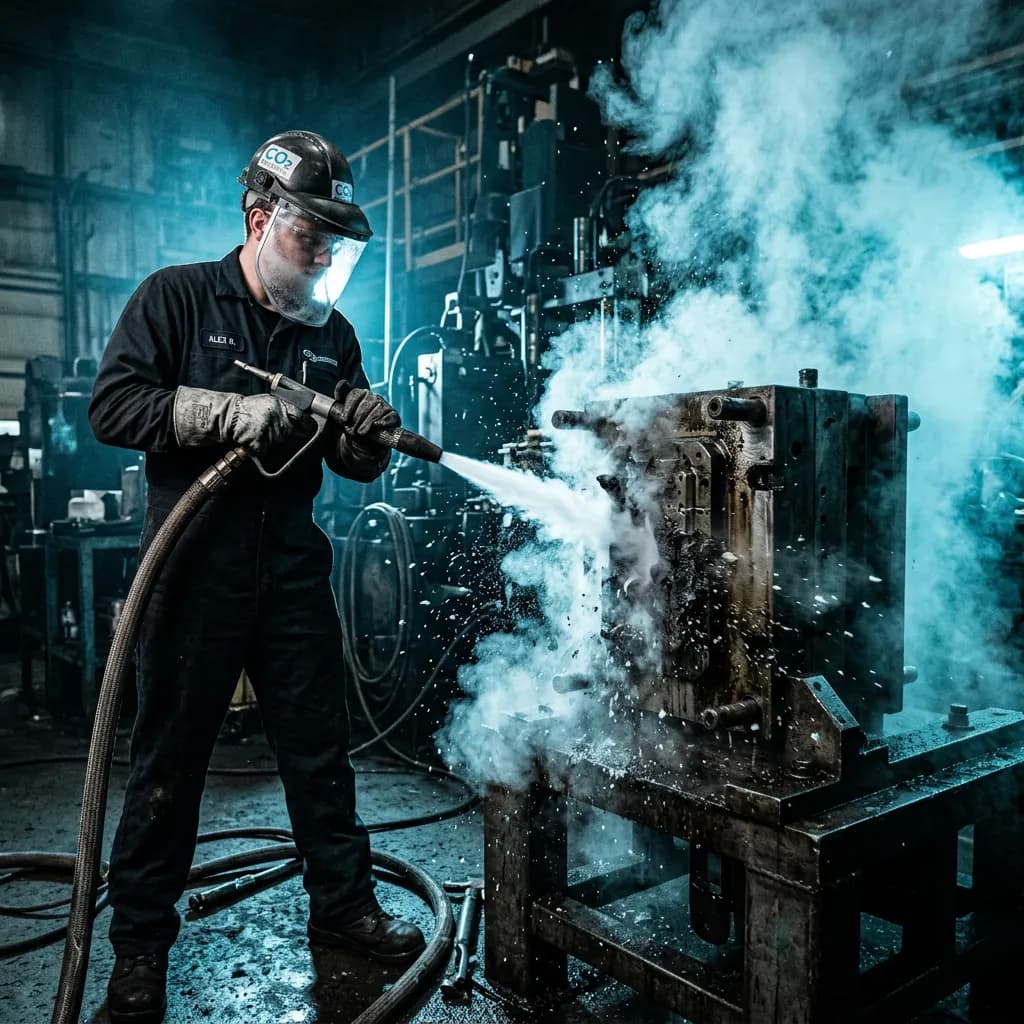
Dry ice blasting propels 3 mm dry ice pellets onto a surface with compressed air. The pellet breaks the contamination with kinetic energy, cracks it with −78.5 °C thermal shock and, as it sublimes into roughly 800 times its own volume of gas, lifts the residue off the surface. What remains is a clean surface and the removed dirt — no water, no grit, no secondary waste.
Three cleaning mechanisms
- Kinetic impact: the pellet, travelling close to the speed of sound, strikes the contamination layer and opens the first crack.
- Thermal shock: sudden cooling to −78.5 °C breaks the bond between dirt and substrate because the two contract at different rates.
- Volume expansion: as the pellet turns from solid to gas it expands inside the crack and physically pushes the loosened layer away.
Where it shines
| Area | Contamination removed | Gain |
|---|---|---|
| Electrical cabinets & PLCs | Dust, oil mist, carbon | Cleaning without de-energising; short-circuit risk removed |
| Moulds & injection tooling | Burnt resin, release agent | Cleaned hot and in place; no tool wear |
| Food production lines | Burnt oil, caramel, biofilm | Chemical-free; line restarts without ever getting wet |
| Tanks & boilers | Process residue, carbonised layer | Detailed cleaning without dismantling — hours, not days |
| Printing | Ink, adhesive | Print quality restored without removing the rollers |
| After fire damage | Soot, odour layer | Restoration on timber and brick without abrasion |
Where care is needed
- Loose paint, old coatings and corroded surfaces may come away with the dirt — a test patch determines this in advance.
- In confined spaces CO₂ build-up creates an asphyxiation risk; forced ventilation and continuous CO₂ monitoring are mandatory.
- Pellets larger than 3 mm can micro-pit very delicate surfaces; this is controlled with pressure and stand-off distance.
- High noise (90–115 dB): hearing protection is compulsory.
Machine or service?
If you run a few large clean-downs a year, a mobile crew service is clearly more economical: the machine, the compressor, the dry-air conditioning and the operator experience all come from us. For plants that need cleaning weekly or more often, investing in a JS series machine usually pays back in 6–12 months. One short meeting settles it — tell us your cleaning frequency and we will put both cost models side by side.
Products mentioned in this guide
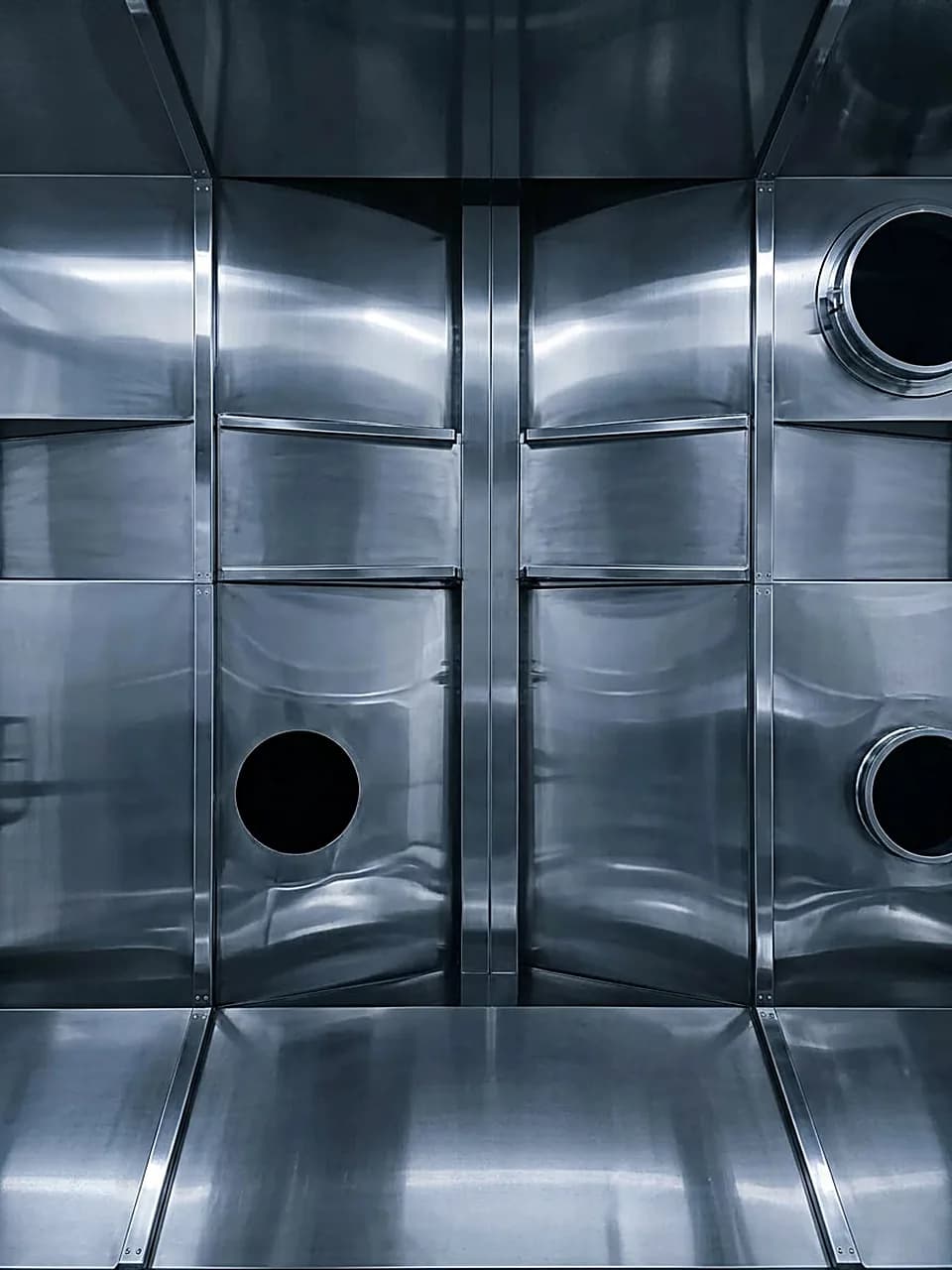
Mobile Crew Industrial Cleaning
Our mobile crew arrives with its own equipment and cleans your line without stopping it, without water and without chemicals. The only waste left is the removed contamination.
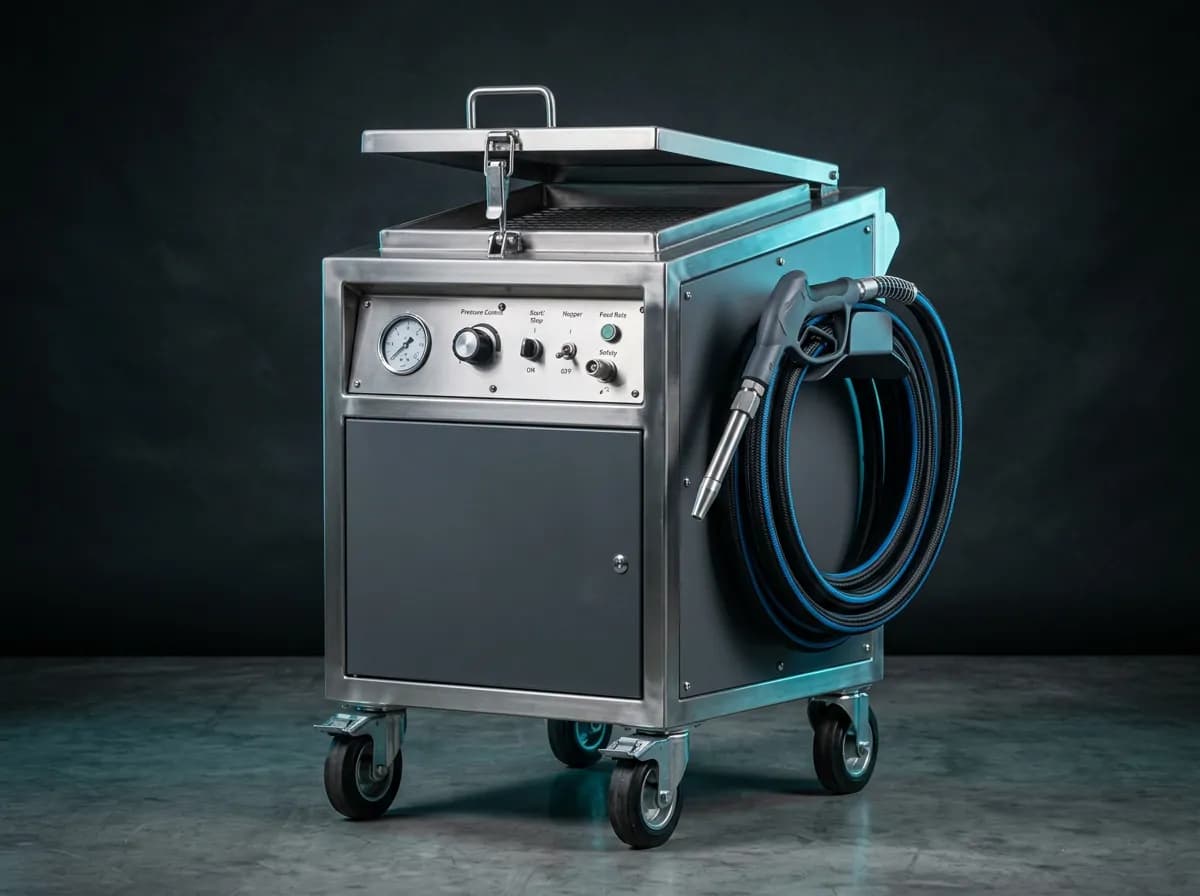
Machine Sales & Rental
JS series machines for plants that want their own cleaning capability: sales, short-term rental, operator training and a pellet subscription in one package.
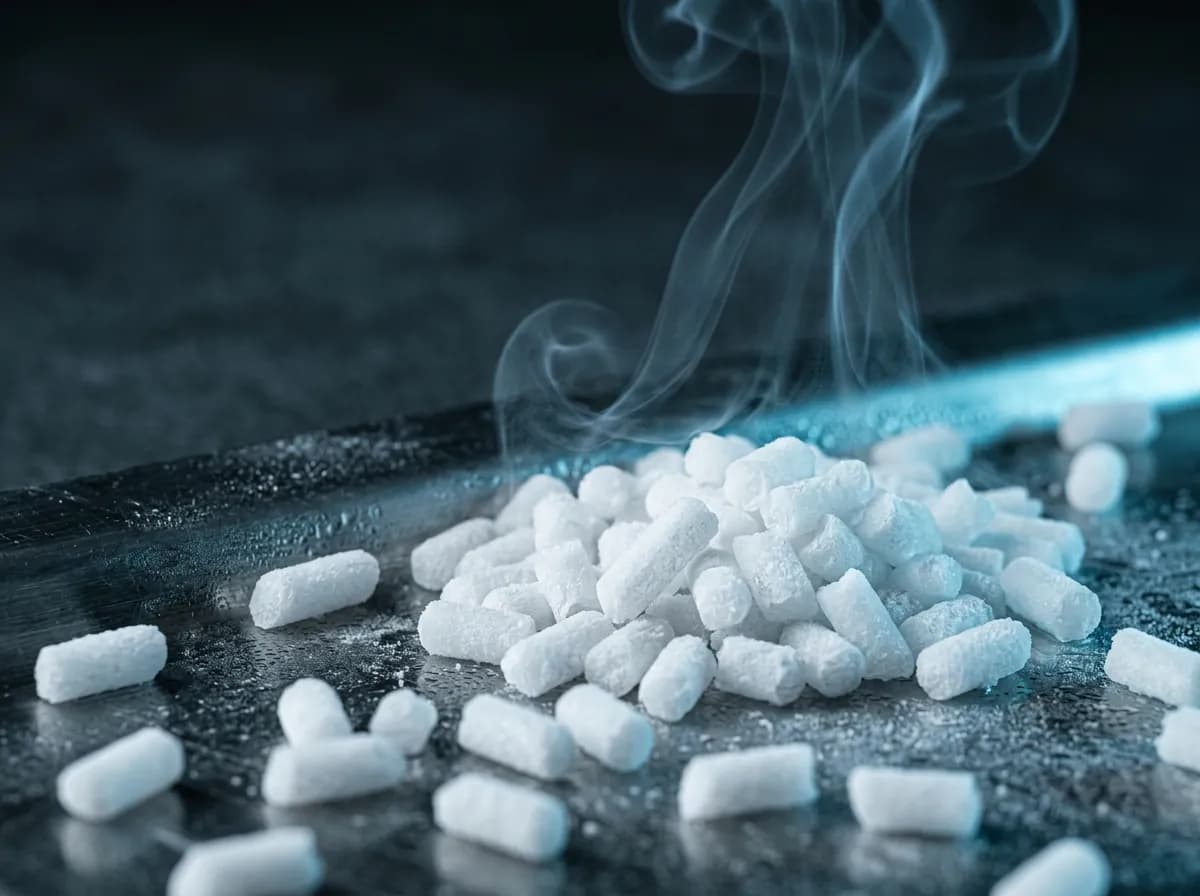
Pellet
Full-density, rice-sized pellets pressed for blasting machines. They fly without breaking up in the nozzle and deliver a clean thermal shock on the surface.