
Dry ice is not dangerous; using it without rules is. Once you accept three physical facts the rest is simple protocol: it is very cold (−78.5 °C), it turns into gas (CO₂), and that gas is heavier than air.
Three golden rules
- 11 · Never touch it with bare handsContact causes frostbite within seconds. Do not touch the ice without insulated cryogenic gloves; use tongs and scoops.
- 22 · Never keep it in an unventilated spaceCO₂ is heavier than air, collects at floor level and displaces oxygen. Always ventilate cold rooms, vehicle cabins and cellars continuously; use a CO₂ monitor for confined-space work.
- 33 · Never seal it in an airtight containerSubliming ice produces about 800 times its volume in gas. Airtight drums and jars will burst. Use EPS boxes or carriers with gas relief channels.
Storage
- Keep it in its insulated box in a cool, ventilated area; the warmer the surroundings, the faster it disappears.
- Putting it in a freezer backfires: at −18 °C a freezer is *warm* compared to dry ice and speeds up sublimation.
- A daily loss of roughly 3–7 % in silos and large boxes is normal; plan your stock accordingly.
First aid
On skin contact, warm the area with lukewarm (not hot) water without rubbing and seek medical attention. If there is dizziness, rapid breathing or headache, leave the area for fresh air; if symptoms persist, call for medical help.
Products mentioned in this guide
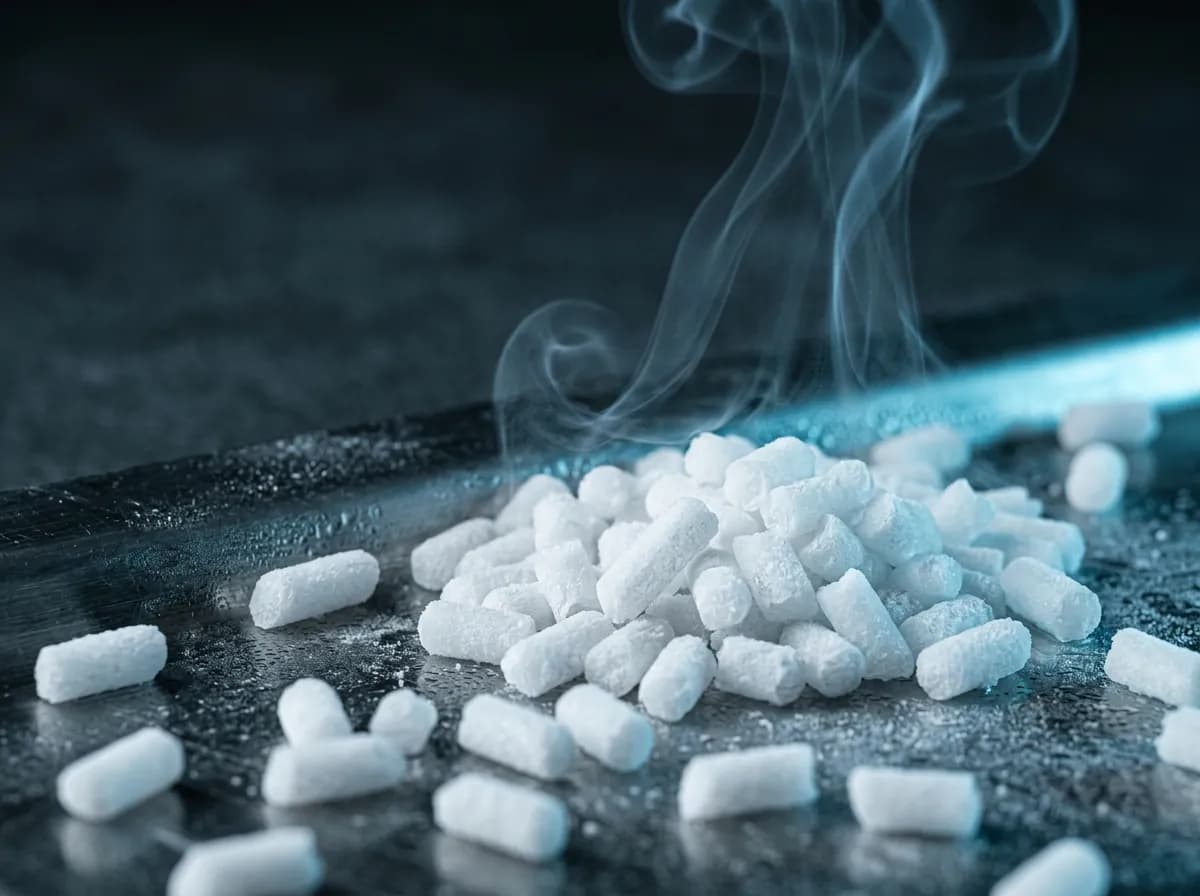
Pellet
Full-density, rice-sized pellets pressed for blasting machines. They fly without breaking up in the nozzle and deliver a clean thermal shock on the surface.
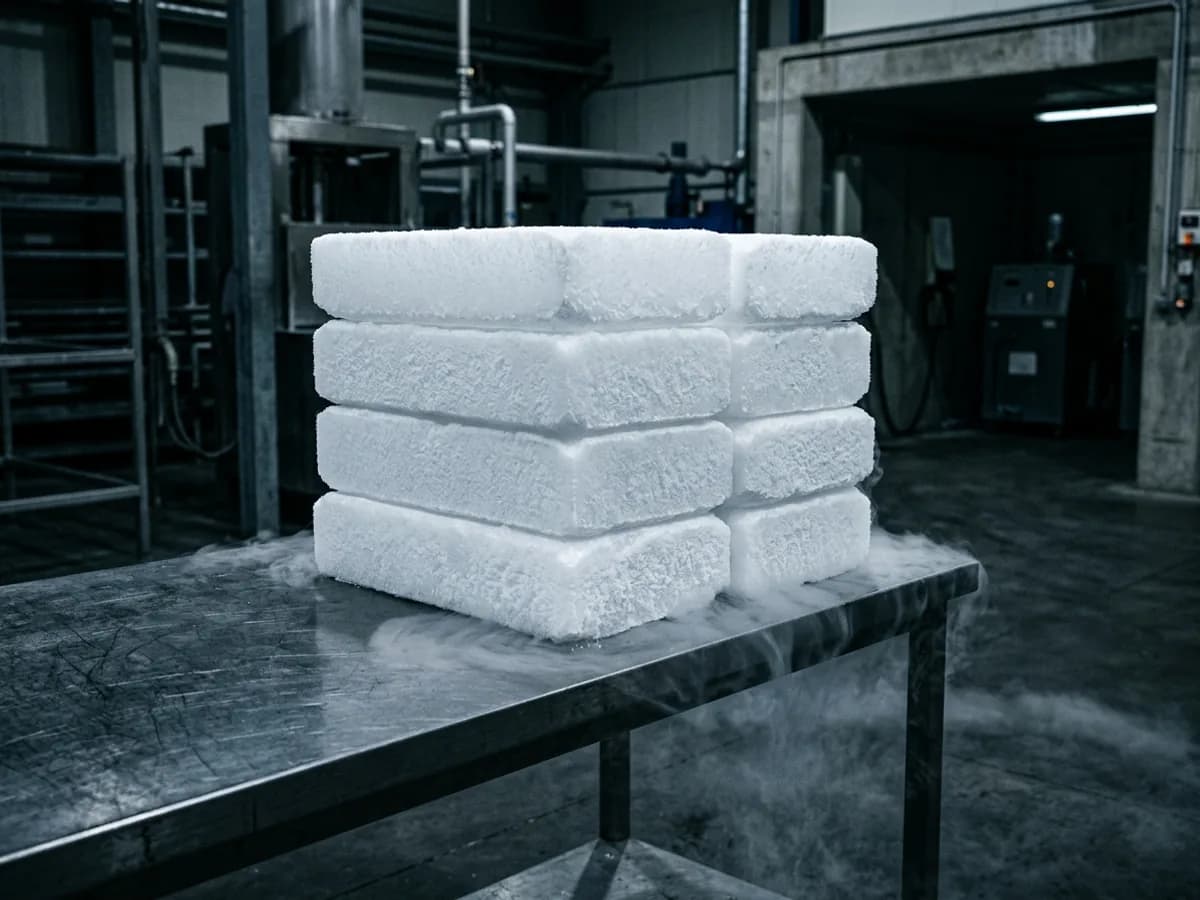
Block
Minimum surface, maximum endurance: pressed blocks and cut slices that slow sublimation down on 72–120 hour lanes.
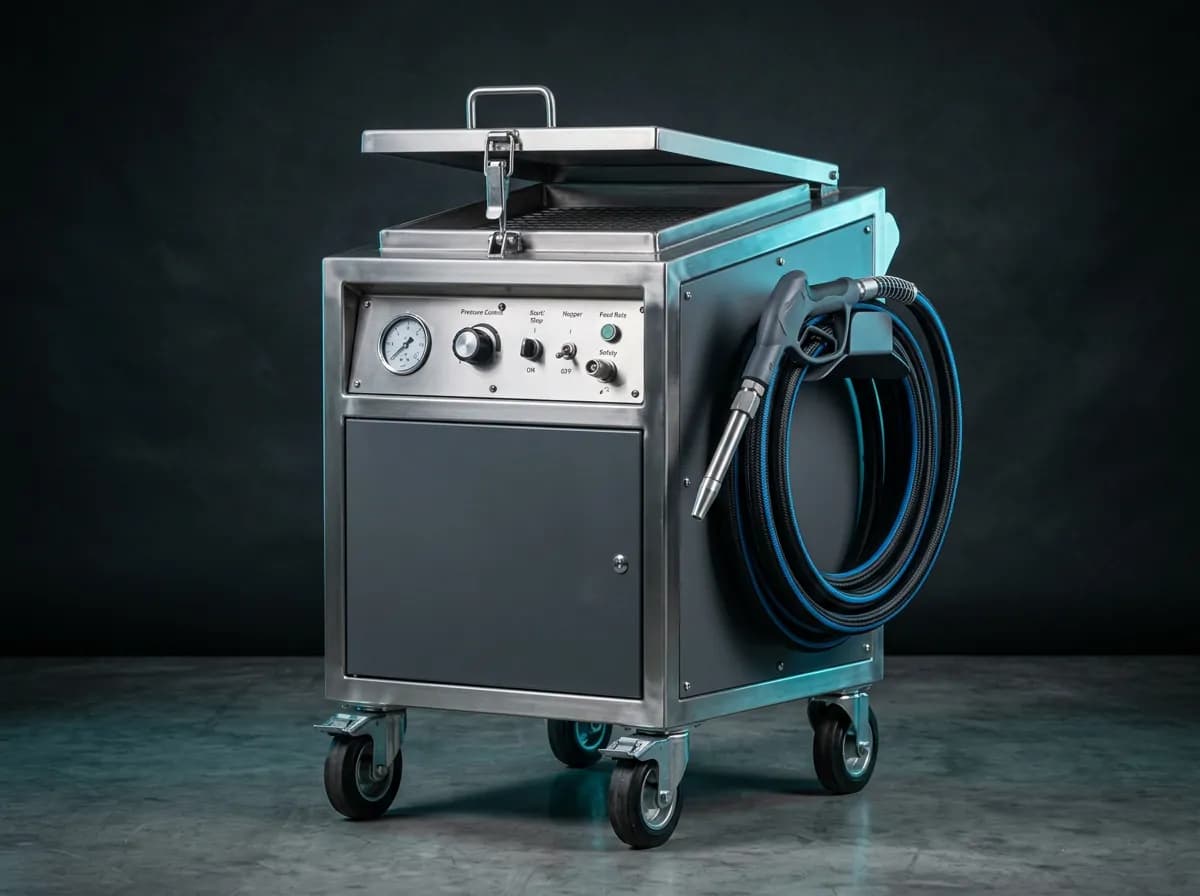
Machine Sales & Rental
JS series machines for plants that want their own cleaning capability: sales, short-term rental, operator training and a pellet subscription in one package.