
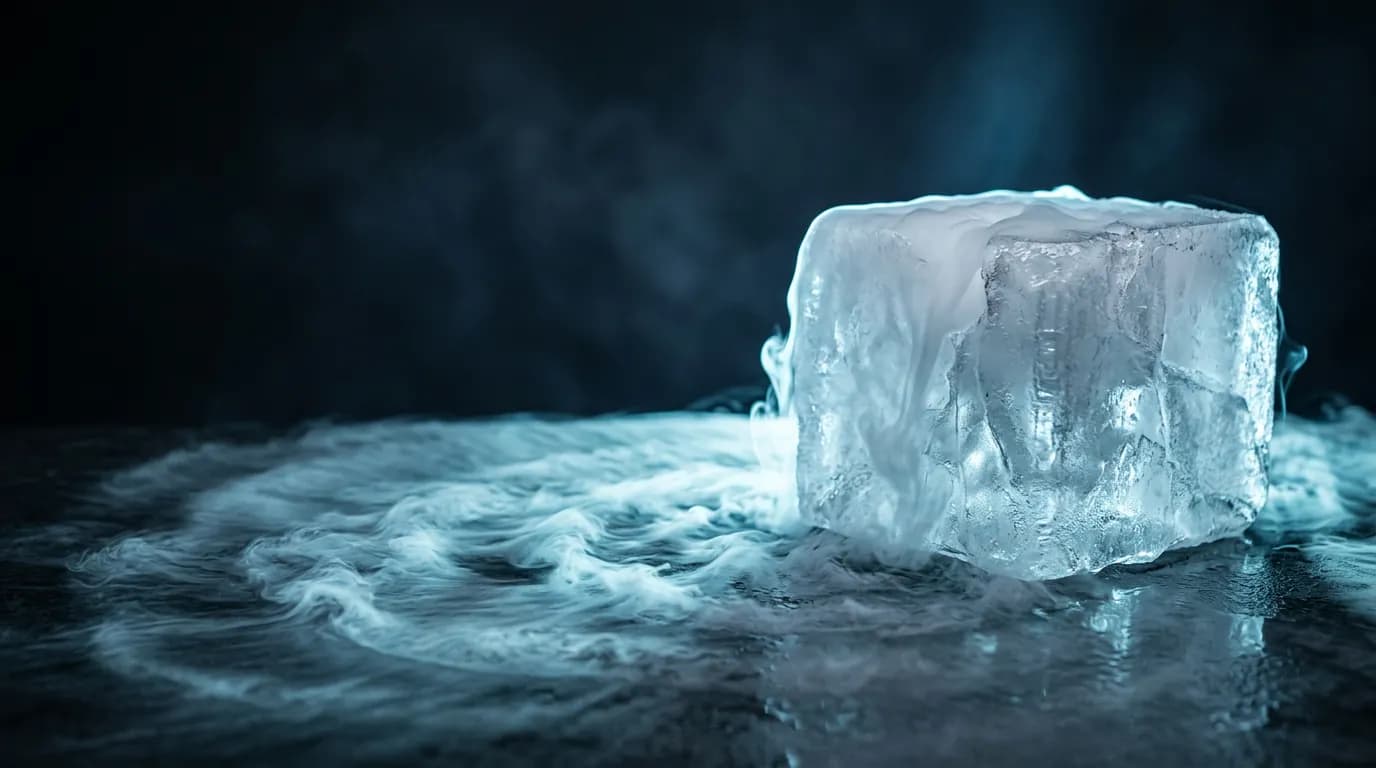
Dry ice is the solid form of carbon dioxide. At normal atmospheric pressure CO₂ has no liquid phase: as it warms, dry ice does not melt, it turns directly into gas. That phase change is called sublimation, and it is exactly what gives dry ice its name — it never leaves moisture behind.
Why exactly −78.5 °C?
At 1 atm the solid–gas equilibrium temperature of CO₂ is −78.5 °C. The ice holds itself at that temperature because it draws heat from its own phase change rather than from the product. That fixed point turns dry ice into a predictable cold battery — the cooling curve can be calculated and the packaging can be planned.
Three revolutions in industry
- In cleaning: the cleaning medium disappears by itself, so there is no secondary waste — the entire economics of blasting rests on this.
- In the cold chain: because there is no moisture, packaging, labels and retail cartons survive intact; air freight regulation responded by creating UN 1845.
- In processing: the constant −78.5 °C reference makes shock cooling, shrinking and quenching repeatable.
Products mentioned in this guide
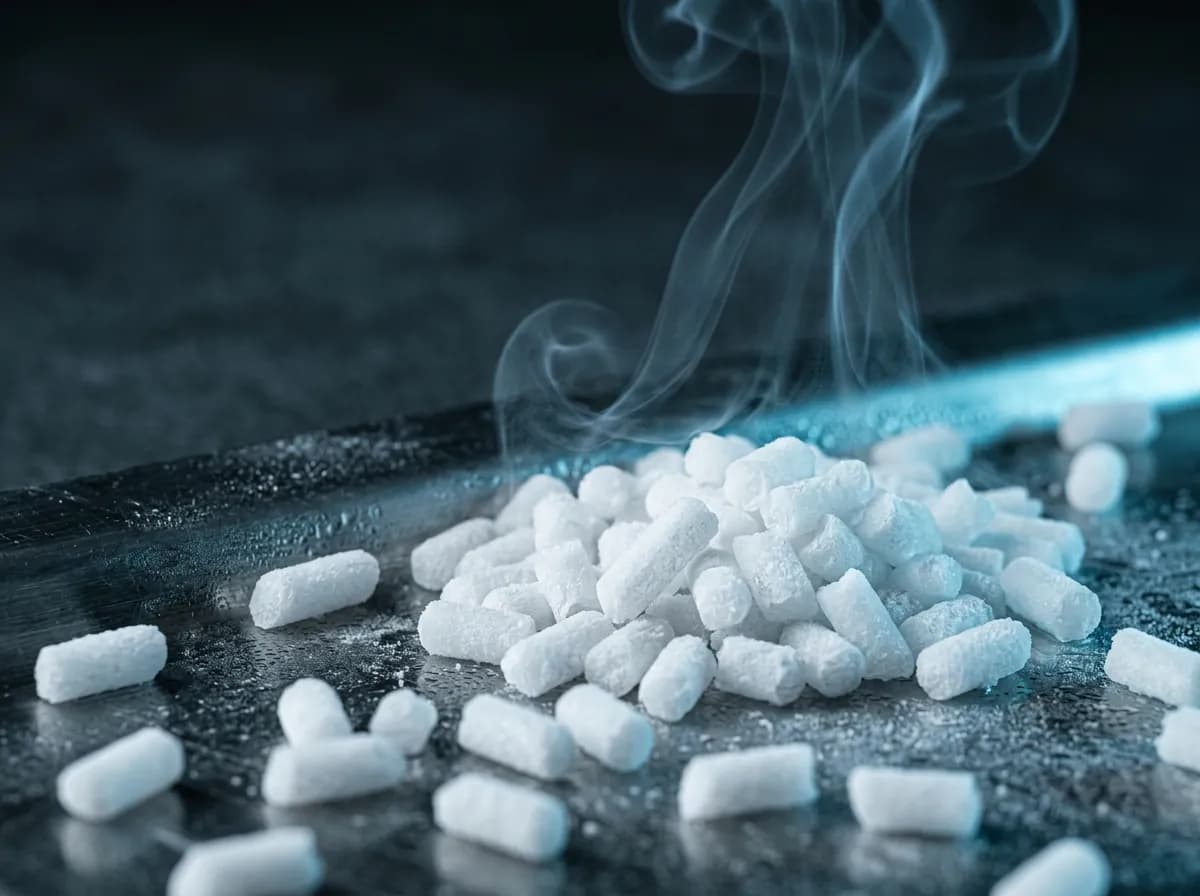
Pellet
Full-density, rice-sized pellets pressed for blasting machines. They fly without breaking up in the nozzle and deliver a clean thermal shock on the surface.
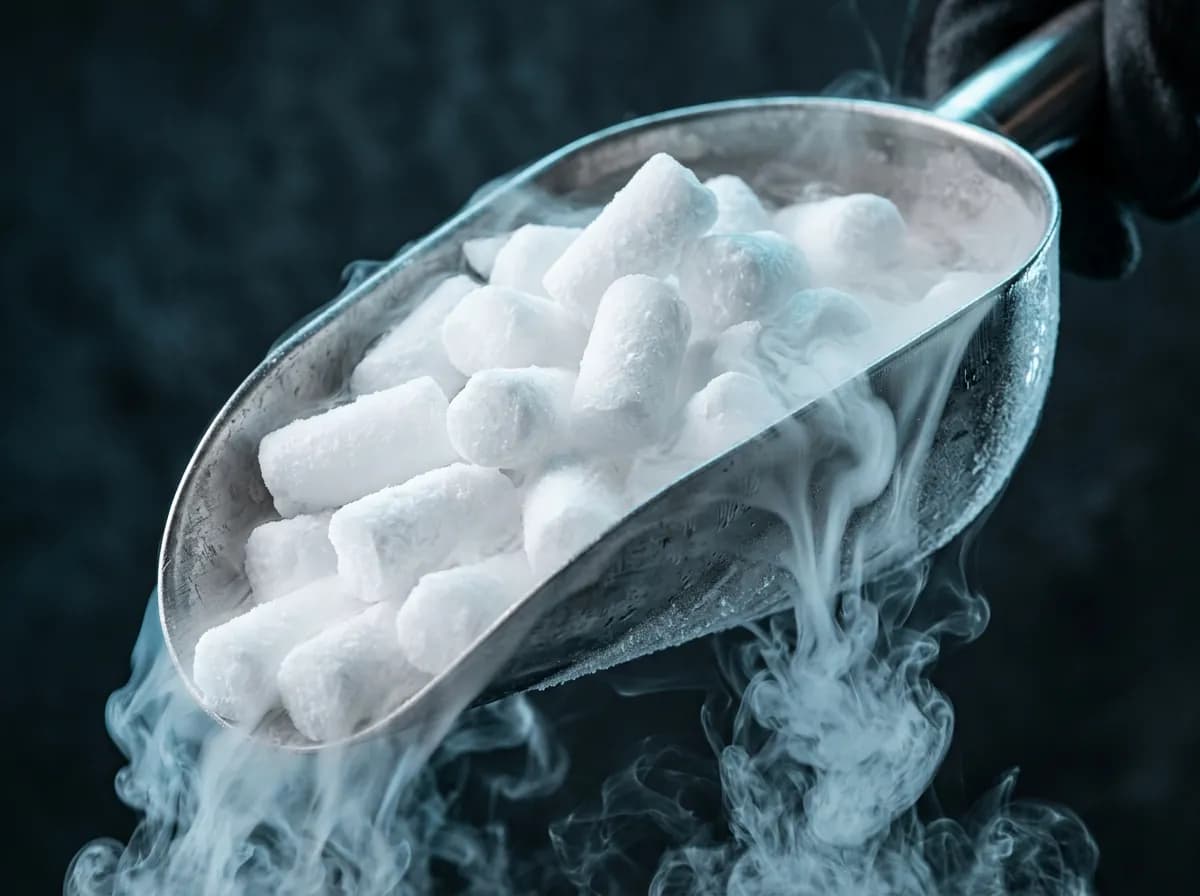
Nugget
Balanced sublimation for food shipments, flash freezing and sample transport: it neither burns off too quickly nor leaves voids in the package.
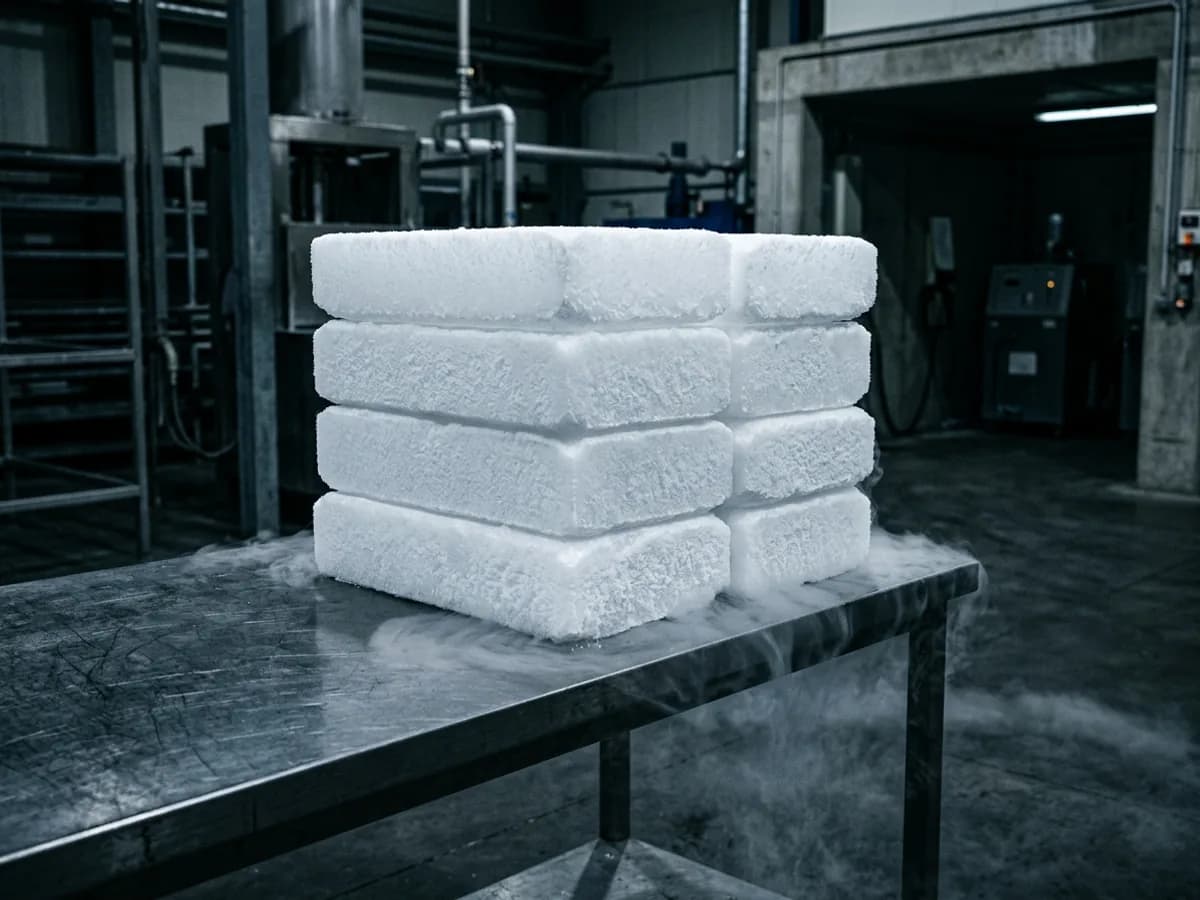
Block
Minimum surface, maximum endurance: pressed blocks and cut slices that slow sublimation down on 72–120 hour lanes.